We’re gonna break out the hats and hooters, as we have a reason to celebrate. Sure, the Fourth of July and 250 years of independence sounds exciting, but that’s rather plebeian compared to what’s coming up. If you’re in love with your car, or simply lust for those of others, it’s time to put on your boogie (driving) shoes.
Article and images by John Grafman
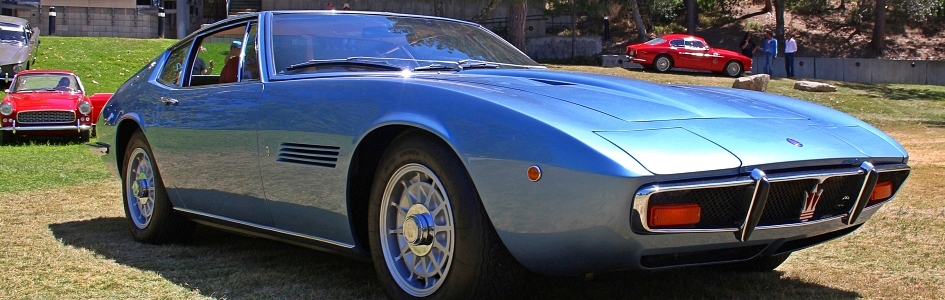
Cover shot – 1971 Maserati Ghibli SS / Owner: Carl Mellinger
One can arguably attribute the birth of automotive design to Los Angeles nearly 100 years ago. In 1927, Harley Earl became the first Design Director for GM. His background stemmed from crafting custom bodied cars for the Hollywood movie stars of the day in Downtown Los Angeles. Had it not been for the flourishing movie business, stars and executives desiring to appear extra special, and the talented local craftsmen that were bringing more attractive, custom bodies to life, this story might never have happened.
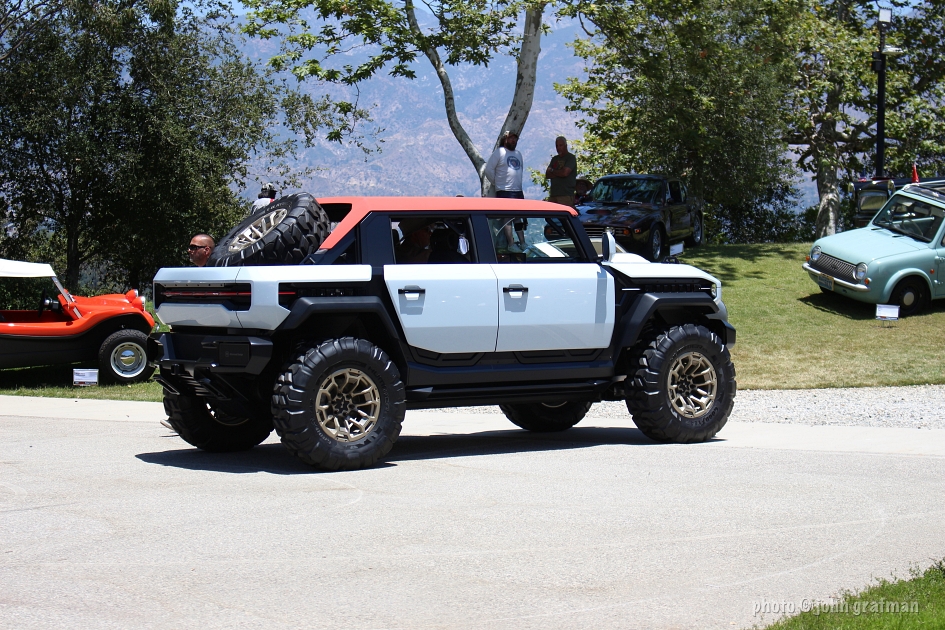
GMC HUMMER X Truck concept
Harley didn’t just come to Michigan with an eye for design, he brought with techniques, like clay modeling. This was game changing and fostered America’s love affair with the car. It wasn’t long before others wanted to become car designers. Prior to that, cars were designed by engineers, and the results were not always easy on the eyes.
The Hollywood Connection
Three years later, in 1930, and just over a dozen miles from Hollywood, Art Center College of Design, now known as ArtCenter, opened its doors. Certainly, Pasadena keeps the torch burning brightly today offering transportation design courses that have churned out a constant flow of skilled artisans. These designers are aptly capable of developing exteriors and interiors with both functionality and attractiveness. And these aren’t just limited to cars.
California has a wide assortment of both primary and satellite design studios. When it comes to car styling, this could be considered Mecca. When the studios get hungry for new talent, ArtCenter is where those companies come to feed. But this isn’t just limited to the studios in California, but various transportation design studios across the country, including Michigan, Texas, the Pacific Northwest, and overseas.
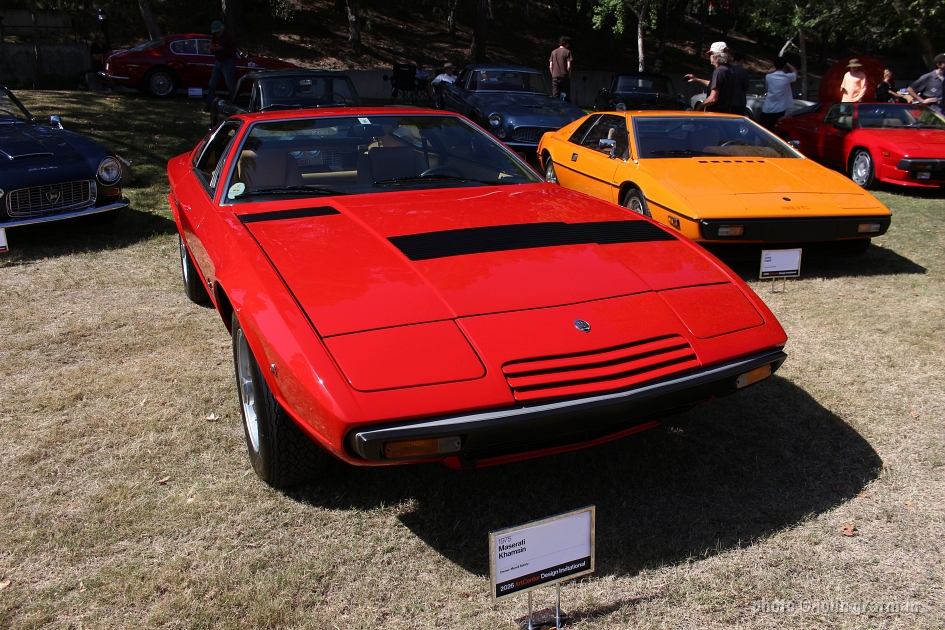
1975 Maserati Khamsin
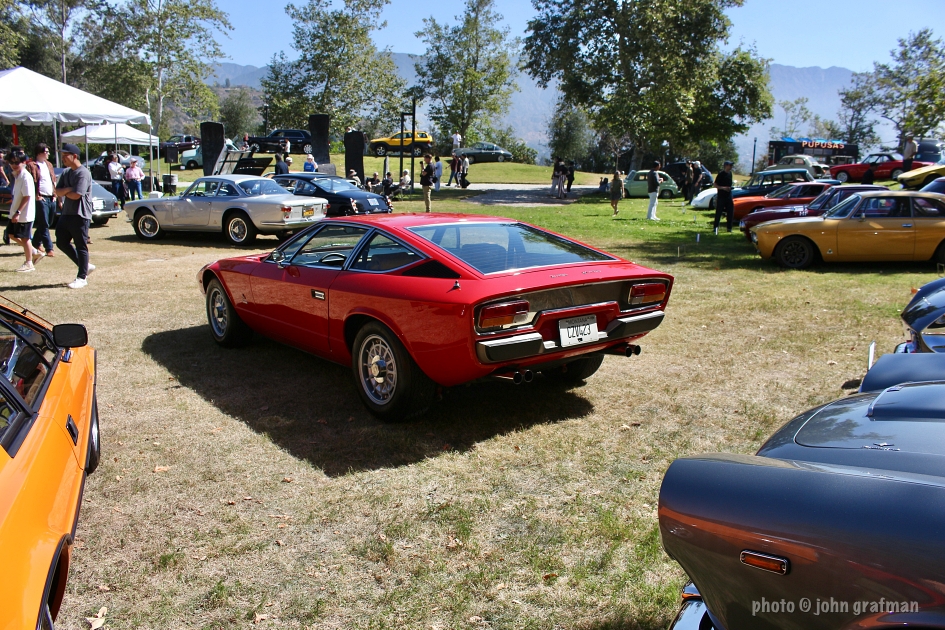
1975 Maserati Khamsin
But it would be short-sighted to not appreciate what other countries have contributed. Often, Italy is a leader in style and fashion. With that in mind, ArtCenter’s annual Design Invitational is celebrating those cars that have Italian roots. But, as usual, there’s more to the story.
The Design Invitational is at its core the event previously entitled the ‘Car Classic’. The school launched this 25 years ago, in 2001. This brings together current students, alumni, and industry professionals. On the West Coast, this is a homecoming, in a sense. It’s a chance to see those that have drifted apart. It also allows passionate enthusiasts and press to rub elbows with the icons of the automotive design world.
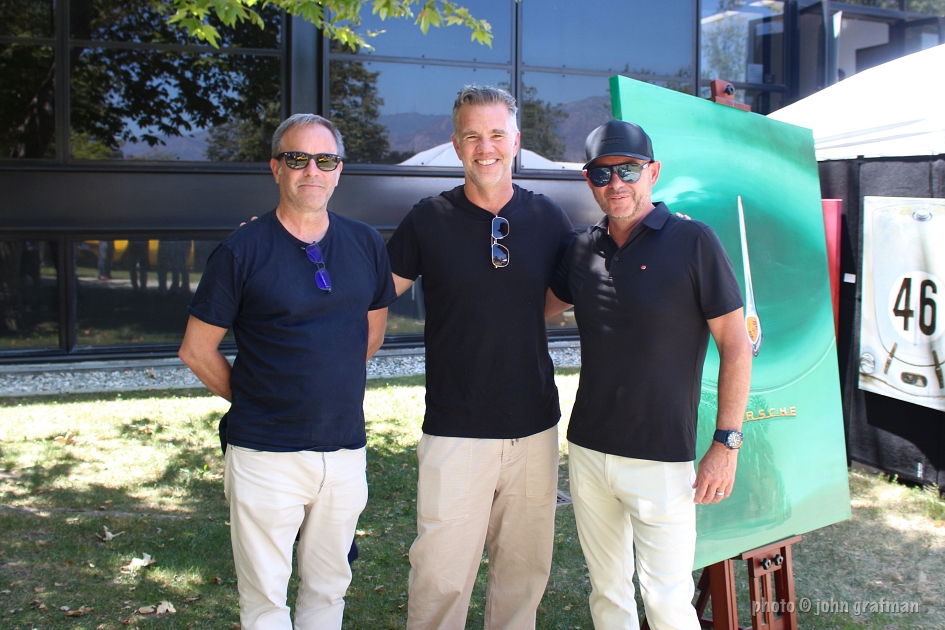
(L-R) Jason Hill, Franz von Holzhausen, Derek Jenkins
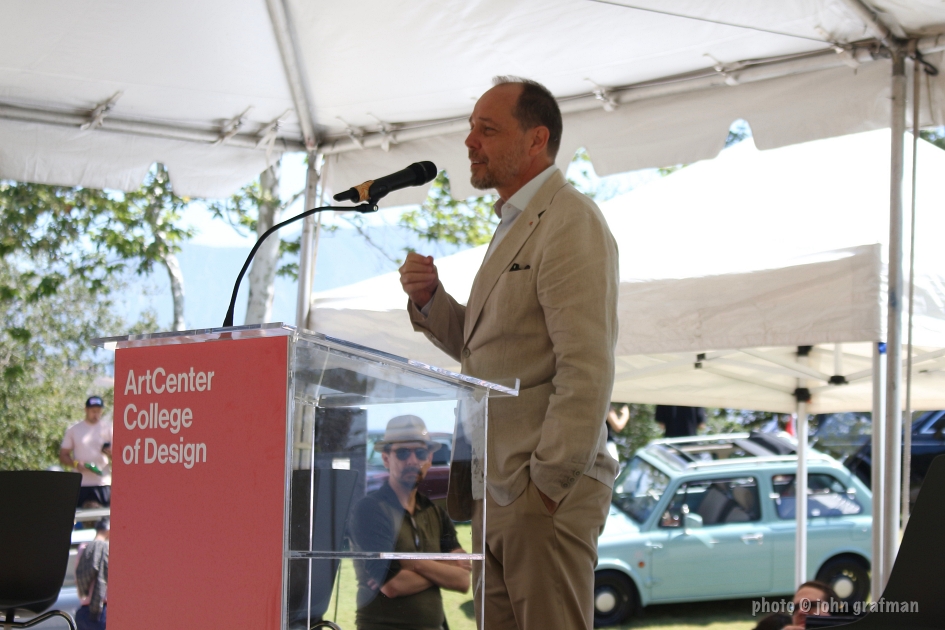
Marek Djordjevic – ArtCenter Chair of Transportation Design
An Italian State of Mind
Currently, it’s getting difficult to know who’s who, and what’s what, as many companies have been swallowed up by multi-national corporations. Is Alfa Romeo really, truly Italian if it’s owned by Stellantis? Jaguar and Aston Martin came under scrutiny when Ford became the parent. Is Mini British or German? Half-a-century ago, it was obvious what was Italian, at least those cars that made it to the shores of North America. Virtually all had distinct, sporty, sexy looks. This is what ArtCenter recognizes.
Legendary Italian names in transportation and product design have produced a disproportionately large number of iconic cars and set the bar high – Giovanni and Nuccio Bertone, Alejandro de Tomaso, Marcello Gandini, Giacinto Ghia, Giorgetto Giugiaro / ItalDesign, Battista Pininfarina / Automobili Pininfarina, and Ugo Zagato of Zagato.
Numerous examples dot the famed Hillside Campus and remind us that when done right, style doesn’t go out of style. It might not be contemporary, but it’s still highly desired. Fashion, as in apparel, can be fleeting. Forms of transportation, as well as products, are often constructed to last decades. As such, it’s important to get it right. This is appreciated by the owners, as well as the world at large. After all, when stuck in traffic, it’s not as bad when the view out the window is of beautiful forms of transport.
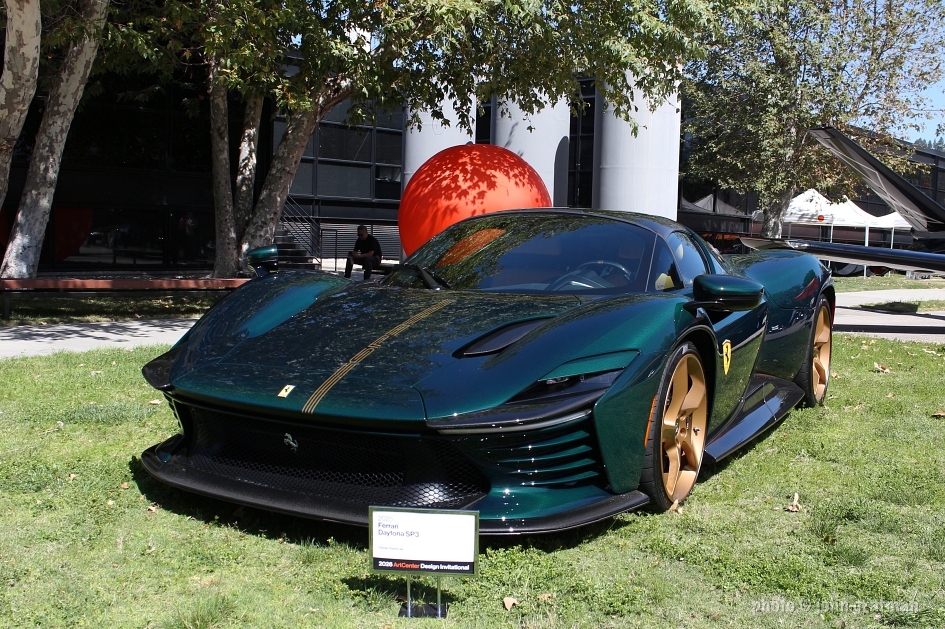
2025 Ferrari Daytona SP3
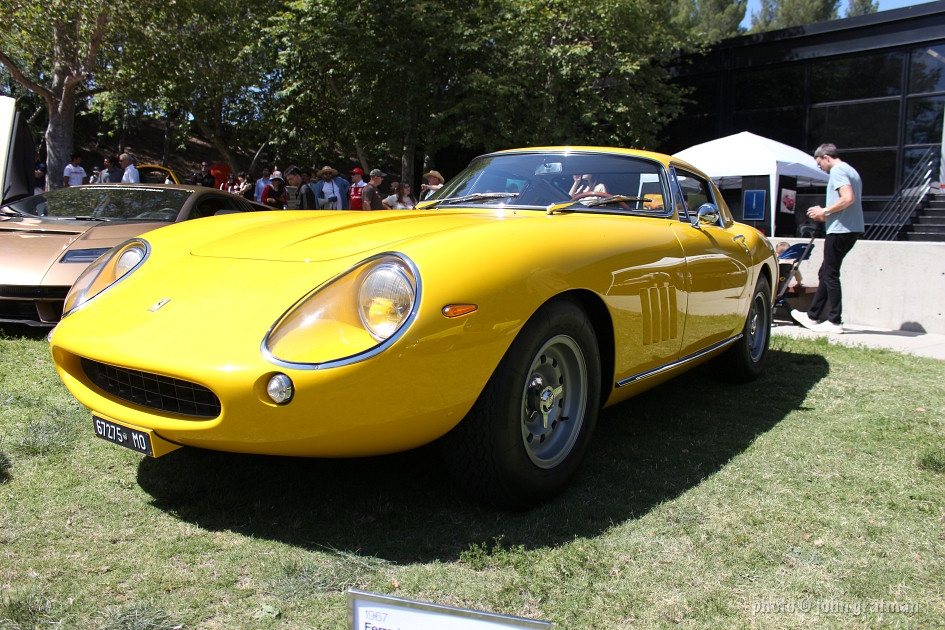
1967 Ferrari 275 GTB/4 Scaglietti Berlinetta | Winner of the ArtCenter College of Design Award at Pebble Beach Concours d’Elegance 2025
As in years past, the school has a bevy of leaders in the design world as invited speakers. One doesn’t even have to be an auto aficionado to respect those on the stage and enlightening us on any number of topics. It should be no surprise that those design executives also have their personal classic Italian cars on display. In fact, these fantastic creatures from decades ago can still inspire styles in the decades to come.
At the school, the Sculpture Garden is a serene, natural setting in the hills of Pasadena. But today the back patio of the ArtCenter College campus building is disrupted by not just Italian cars, but all manner of transport, from motorcycles to an aircraft prototype display from Cirrus. This allows attendees to really soak in the efforts made to craft beautiful, user-friendly products.

Cirrus Vision SF50
A Concept of a Plan… for Production
As this annual event isn’t just an ordinary gathering of car enthusiasts, having concept cars on-hand just goes with the territory. To punctuate the nature of this affair, GM and Hyundai took the opportunity to dazzle with a couple concept cars that look equally at home in the great outdoors or under the lights at a convention center auto expo.
The GMC Hummer X SUV and SUT concepts were fresh from the nearby GM Advanced Design Pasadena Studio, which is now fully operational after rebuilding from a fire. Bryan Nesbitt, VP of Global Design provided direction on this project. Nesbitt is another standout alum from ArtCenter. Both embrace a streamlined blocky look. The 37” and 35” tires are massive and project a sense of indominable capability. The interior, like so many other modern counterparts, has opted for screens over physical buttons and knobs. The only thing missing in this display is Arnold Schwartznegger in the driver’s seat.
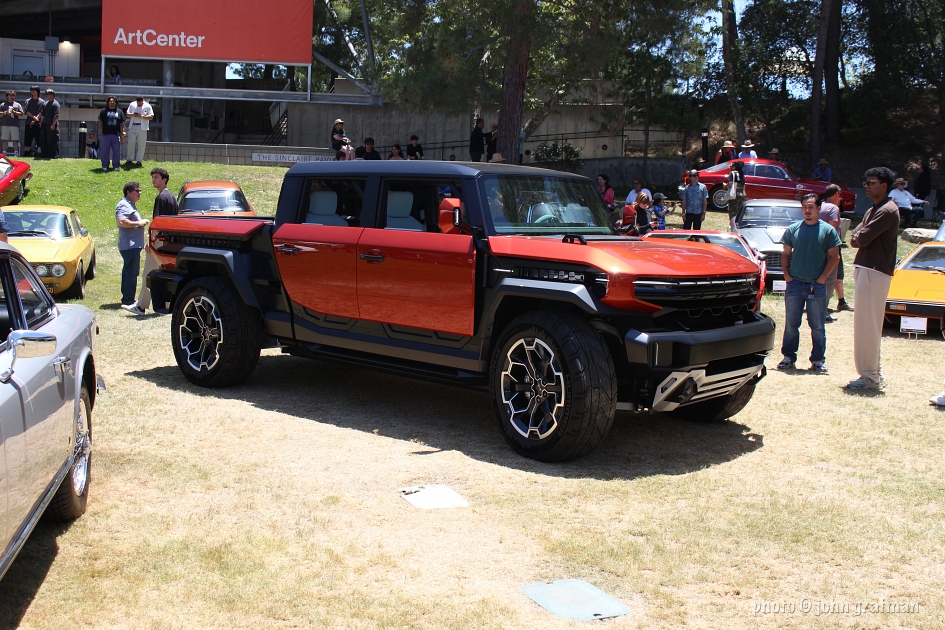
2026 GMC Hummer X concepts SUV
Brian Smith headed of the Pasadena Design Studio for the past four years (until June 1, 2026), and spoke to all on how these two came to life. Brian is transitioning to a new role heading up Chevrolet Performance Design. Expect his imprint on the upcoming Corvettes and more.
The Hyundai Boulder concept provides a look at the Hyundai Design North America studio’s ideas on ruggedness. This is a result of ArtCenter alum, Chief Designer and Head of the studio, Brad Arnold and the team in Irvine, California. The bold vision comes about six months after the debut of the Hyundai CRATER, which also leaned into a go-anywhere, tough as nails look.
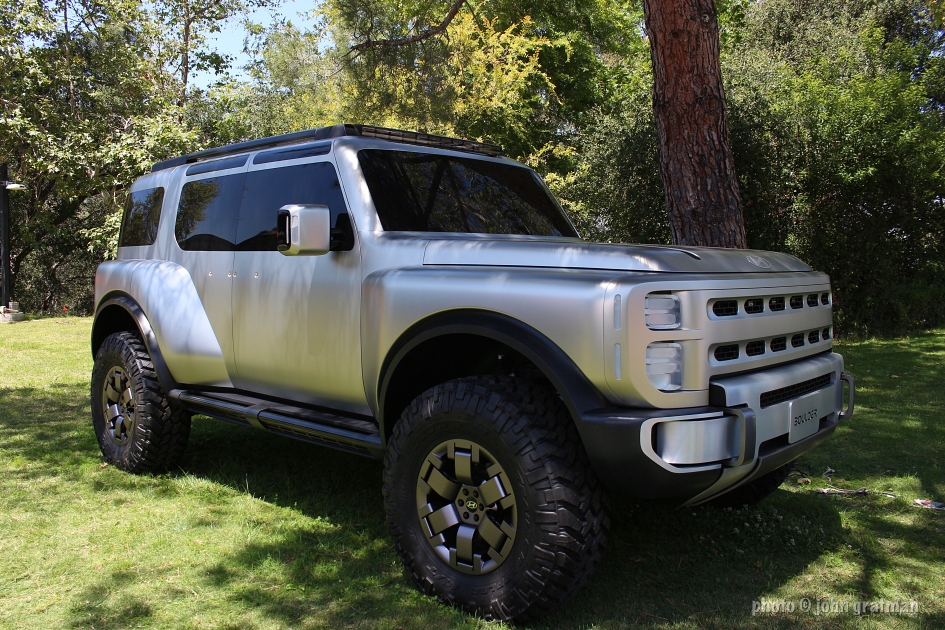
2026 Hyundai Boulder
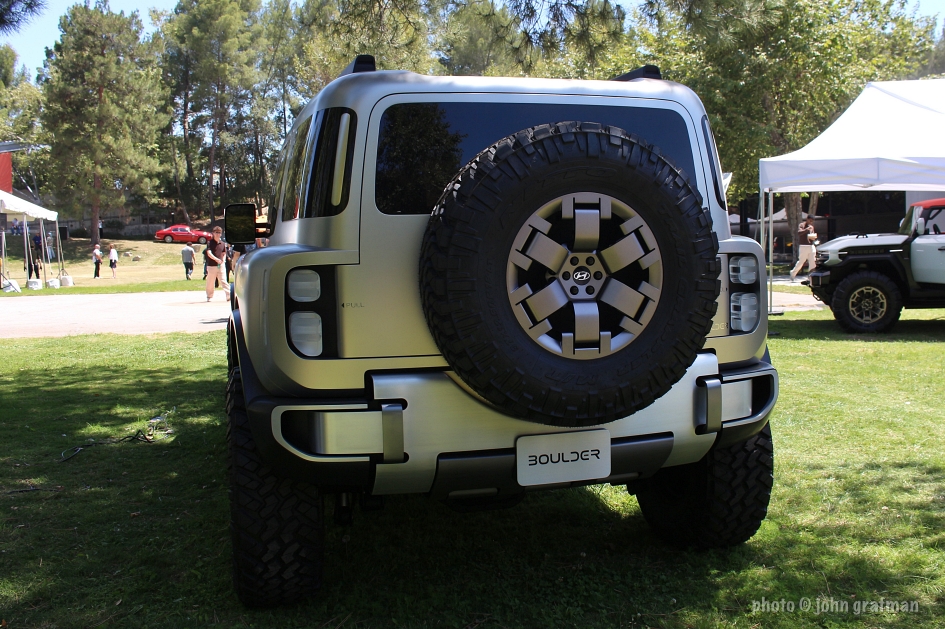
2026 Hyundai Boulder
ArtCenter Alumni Designing Rolling Works of Art
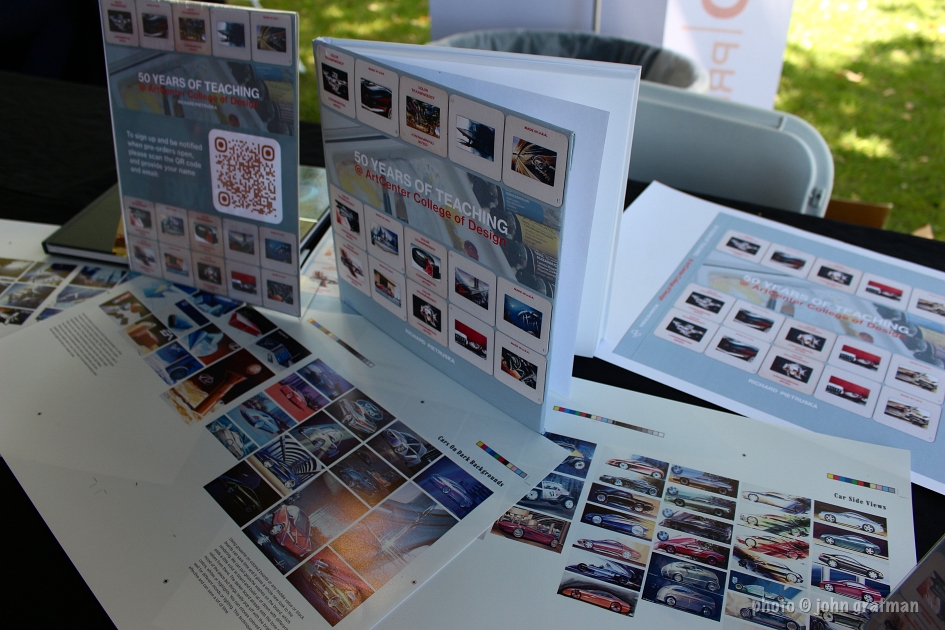
As in years past, the 2026 Design Invitational welcomed back standout alums. This year’s flock at ArtCenter includes Brad Arnold, Dale Berman, Yang Ca, Ian Cartabiano, Kira Churnakoses, John Dixon, Robert Giaimo, Derek Jenkins, Tim Huntzinger, Duvit Kakunegoda, John Krsteski, Richard Pietruska, Stewart Reed, Greg Tada, and Franz von Holzhausen.
Prime examples of what talent emanates from ArtCenter are on display in the form of rolling works of art. The 2026 list includes ArtCenter Alumni designed concepts and production cars and more.
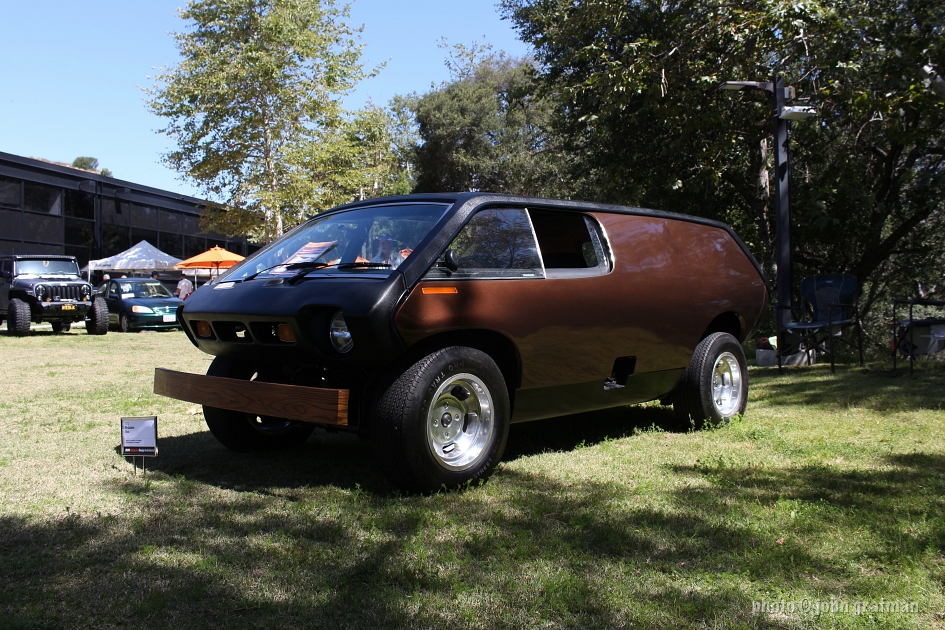
1972 Brubaker Box
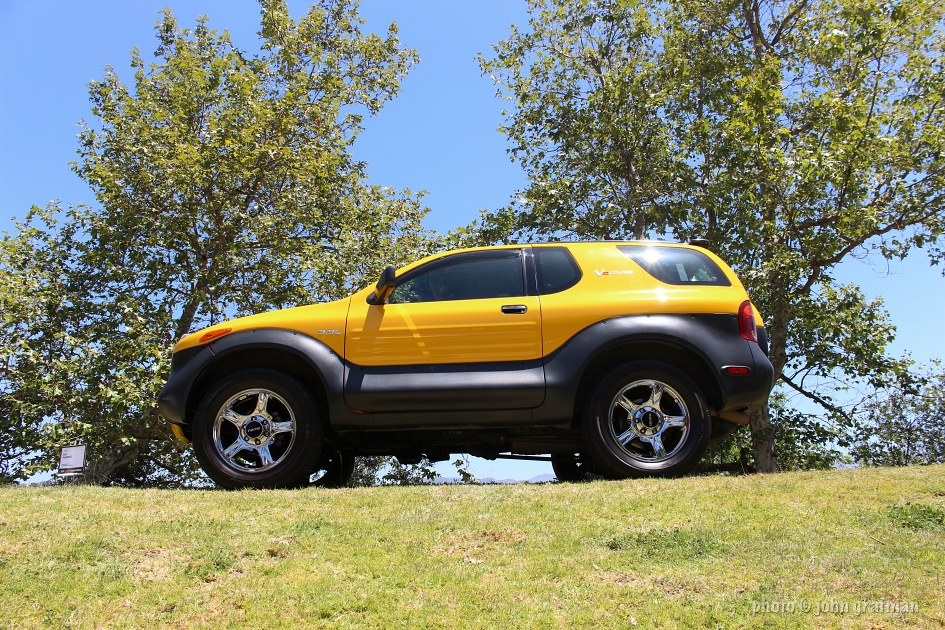
1997 Isuzu VehiCROSS
Aptera Autocycle – Designed by alumnus Jason Hill.
1972 Brubaker Box – Prototype. Designed by alum Curt Brubaker.
Cirrus Vision SF50 Gen 3 (prototype) – Also known as the Vision Jet. Designed by Brad Kappel.
2005 Ferrari F430 Berlinetta – Designed by alumnus Frank Stephenson
GMC HUMMER X truck and SUV concepts – Designed under the direction of Bryan Nesbitt, alum and VP of Global Design at General Motors.
2026 Hyundai Boulder – Designed by Brad Arnold (alum and Chief Designer and Head of Hyundai Design North America) and team.
1997 Isuzu VehiCROSS – Designed by alumnus Shiro Nakamura.
2025 Lucid Air Sapphire – Designed by alums Derek Jenkins and Jenny Ha.
Meyers Manx 2.0 Prototype- Designed by alums Freeman Thomas and Frank Saucedo.
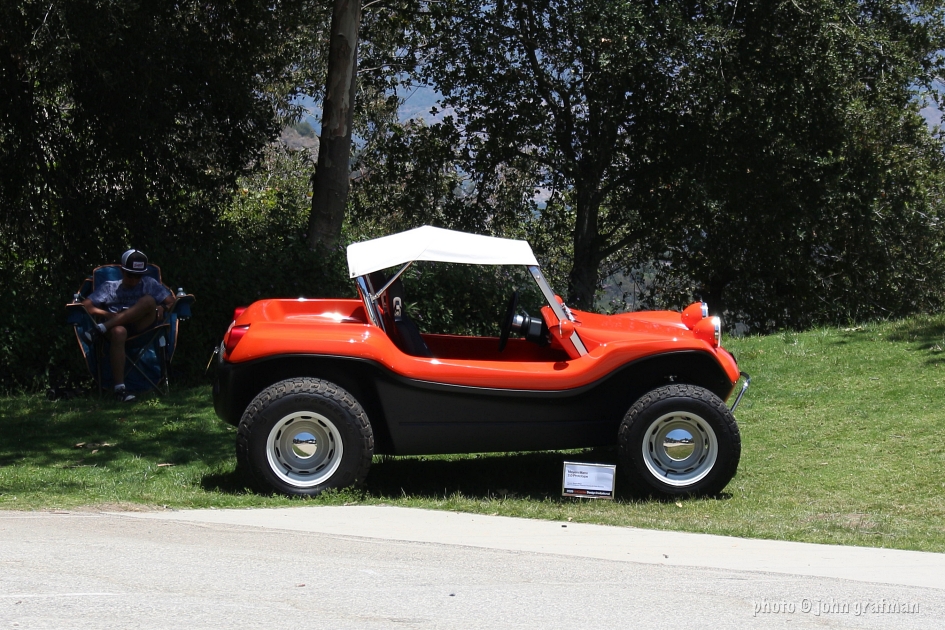
Meyers Manx 2.0 Prototype
Hard to Ignore, Never Linear
Hard to ignore is the 2025 Cirrus Vision Jet private aircraft mock-up that features a single jet engine that’s capable of propelling this to 300 knots-per-hour (in theory). It’s a reminder that cars aren’t the only forms of transportation. Head of Design, Bradley Kappel states, “The path to us is never linear, but for the students that are looking at aviation really, expose yourself to the aviation-minded events that are in the region around us. There’s some really, really cool ways to get into the aviation industry.”
Kappel continues, “There’s an aircraft event in July every year called EAA (Experimental Aircraft Association) AirVenture Oshkosh. And the things being shown and displayed there are VTOL aircraft. There’s, there’s other manufacturers there. Boeings definitely a big player there, and they come and want to show off a lot of the latest products, like we do, to the world. And we want to, kind of, get people inspired and we want to get them seeing what we’re working on. So I would say definitely try to attend these events.”
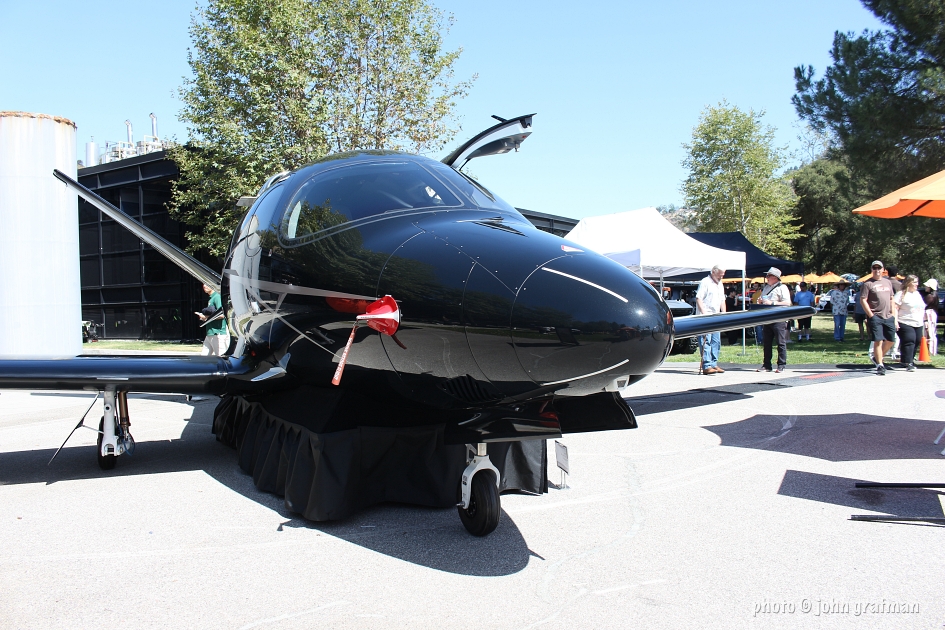
Cirrus Vision SF50
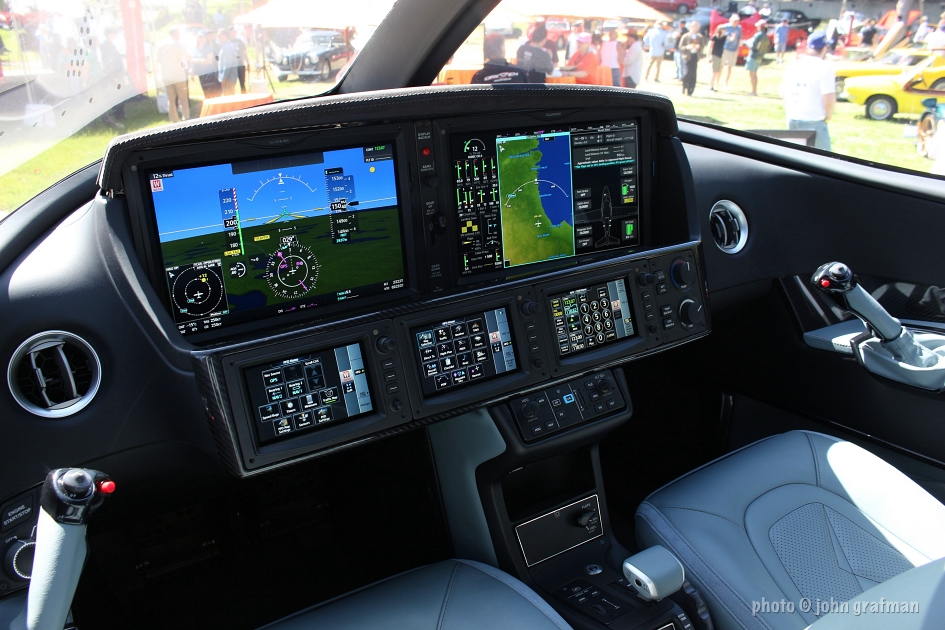
Cirrus Vision SF50
“This is the first time coming to Art Center with this product and it seems like we’ve kind of been able to capture some attention and I think that that is going to be a really good excuse for us to want to come back,” concludes Kappel.
Franz von Holzhausen of Tesla tempted all with his Ferrari 1967 Ferrari 275 GTB/4 Scaglietti Berlinetta in yellow. He tells us, “Love being here Arts Center, it’s amazing. And like I said, it’s we’re I got my career started and there’s plenty of amazing talents that comes in and out of this school, and I love seeing it out in the world and what the students do. Hopefully they get inspired by some of what they see here, and turn that into the future that we end up being transported in.”
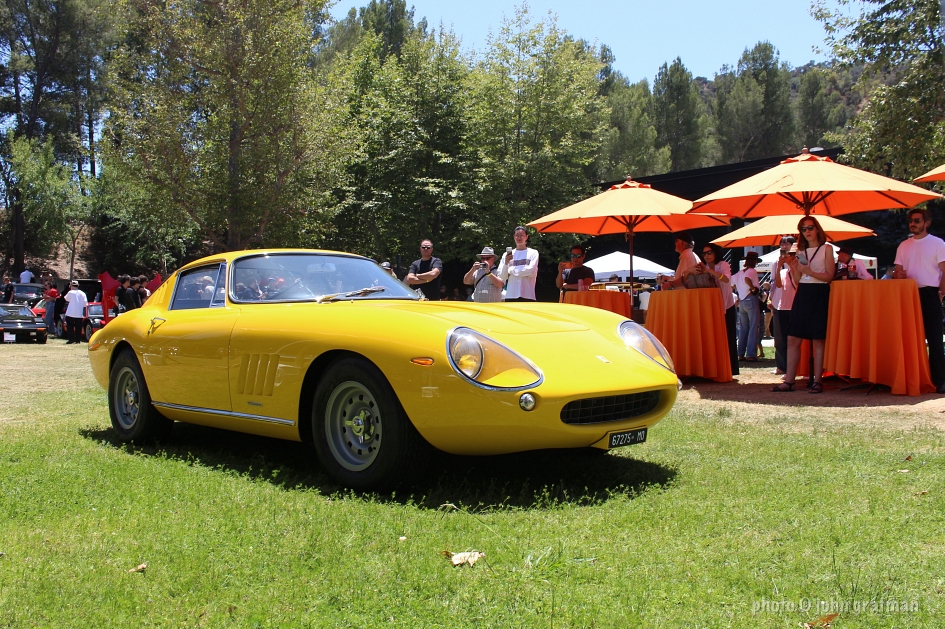
1967 Ferrari 275 GTB/4 Scaglietti Berlinetta
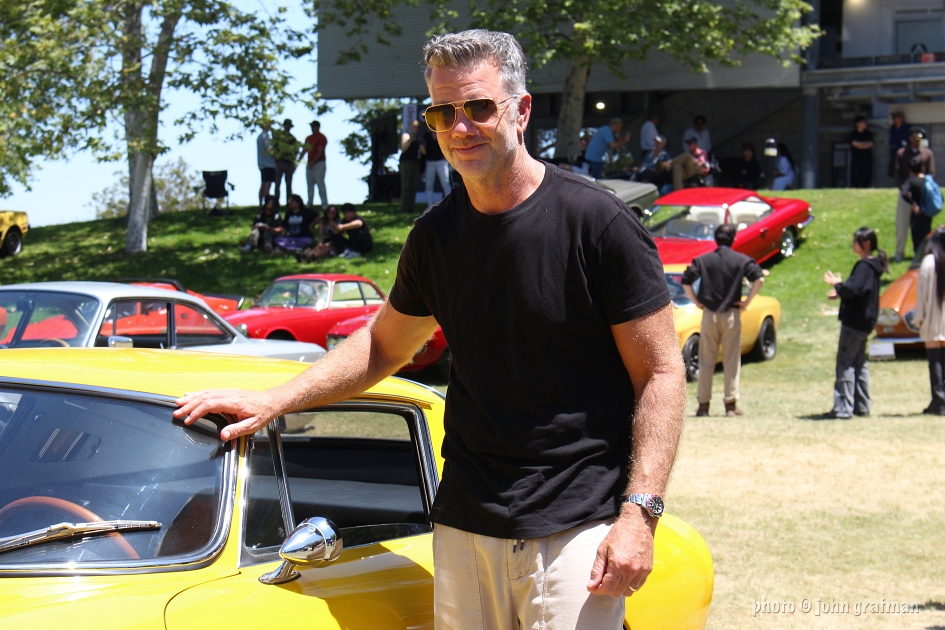
1967 Ferrari 275 GTB/4 Scaglietti Berlinetta and Franz von Holzhausen
A Lot to be Learned
When the subject turns to the shape of the cars from fabled brands and from eras past, Franz states, “… There’s just a lot to be learned about surface language, integrity in the surface, simplicity. Again, like just super classic proportions, I always appreciate trying to bring those things back in a modern way. Yeah. But sometimes it’s just doesn’t go with the classics.”
Now, in terms of the design of Teslas, he informed us, “What we did with all the Teslas was make sure they actually were efficient in their design, as well. The Model S, the Model 3, the Model Y, they’re all the most aerodynamic cars on the road when they were introduced. So not only did we make them attractive and I think in a way beautiful, but they are also efficient through the design.”
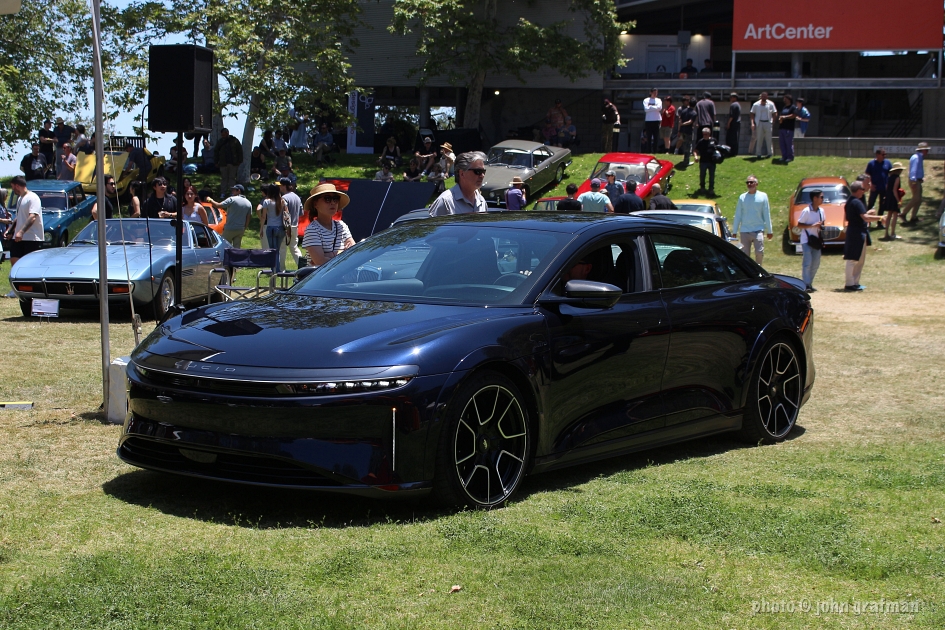
2025 Lucid Air Sapphire
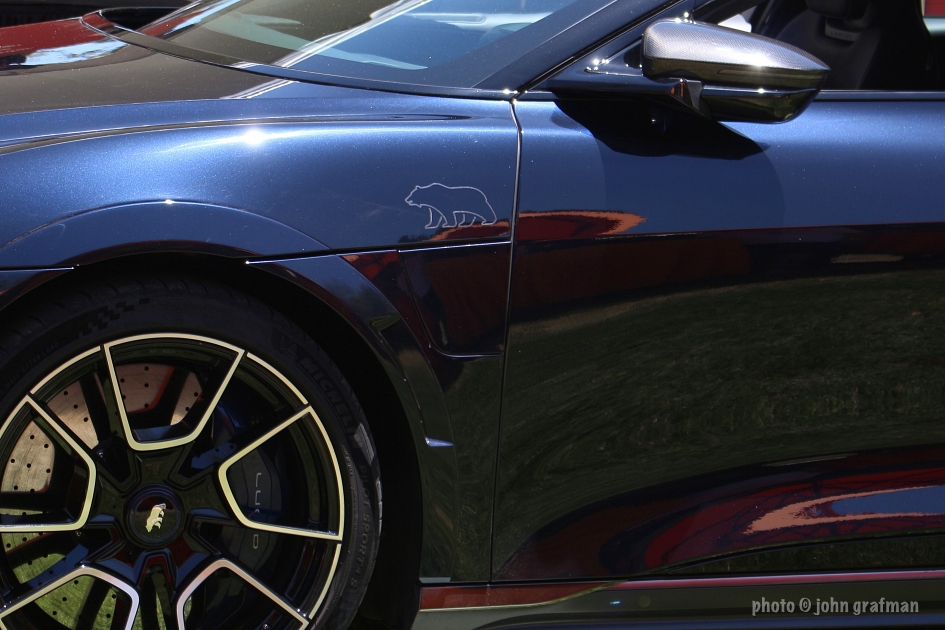
2025 Lucid Air Sapphire
V.P. of Design, Derek Jenkins in a similar vein explains, “Lucid, we as automotive enthusiasts, we’re looking at the history of the automobile and understanding how we can contribute to the evolution towards the future.” On the news of sponsoring an upcoming course at ArtCenter this summer, Derek continues, “This is something I’ve wanted to do for years now, and we just haven’t gotten around to it. But we’ve teamed up with Holly, Jae Minn, Chris Chapman, for a Trans 6 and 7. 23 students in the class. Super excited about it. The brief is what I’m really excited about, which is really about an intersection of automotive enthusiasm, and emotion, and electrification, and what that means for vehicles. We’re in a time where there’s some interesting things happening. Some cars are debuting that are very controversial, and a lot of opinions. I’m a strong believer, especially with the working with students and understanding where we want to go with Lucid, that we can find a wonderful balance between all the new technology, electrification, and of course design and emotion.“
Brian Smith of GM was gracious enough to bring the two Hummer concepts. “These are fresh concepts from our studio, brand new facility in Pasadena. These Hummers are a nice, mid-size look at what a future Hummer could look like. And they feature a lot of great new methodologies, particularly flexible fabrication. So they really look at things from a few software machines to make parts rather than hard tooling and stamping panels. Brian continues, “… and really focus on flexibility and reconfigurability for the customer, so you can make one however you want. The team developed the configurator that goes through every possible option of configuration for both.”
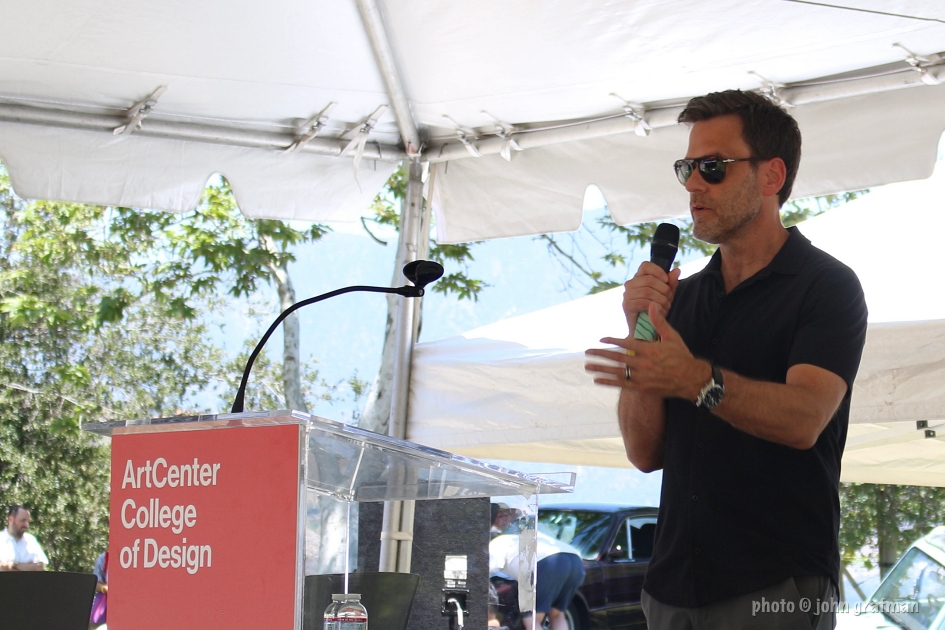
Brian Smith
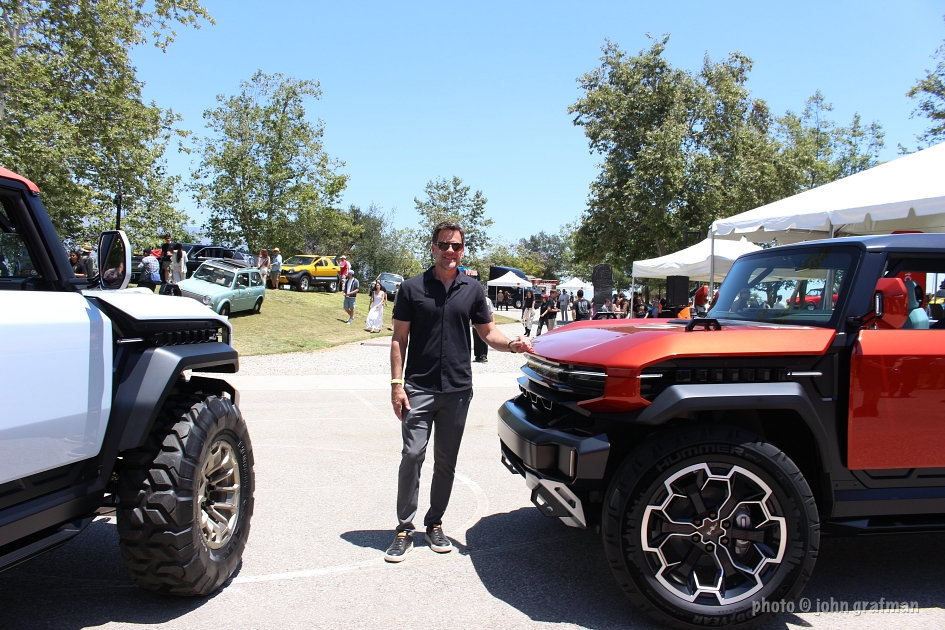
Brian Smith, GMC HUMMER X truck and SUV concepts
Flexible Fabrication, Software or Hard Tooling
While this is indeed a customer-centric idea, it is not novel. Swatch cars, based on the Smart Car, were also supposed to offer a higher level of choices. It didn’t fly. Czinger could produce tailored designs, but that’s easier to achieve when it’s in small numbers. And Local Motors also shared some of this mindset, but that ultimately faded away. However, GM does have capabilities that few others can bring to bear. So, never say never.
How does one ensure that the final model is worthy of production? Brain Smith provides his insight from the stage, “Well, we firmly believe in the need for physical models. Yes, we can do things purely digitally. We can design Hummers all day long, in a digital space and in a digital world. But we firmly believe in making the model real full size, beginning in clay. Want to evaluate the form, the surface, the volume, proportions, and no matter how good you are digitally, nothing beats seeing it and affecting it by hand in the clay model, full-size. We really believe in that. We believe in making hard models and concepts right there on site. So we’ve got our own fabrication shop and 4 full dual-column milling sites where we only had one in North Hollywood. We are one of the few OEM’s and that’s truly committed to continuing the art of clay and developing our models full scale.
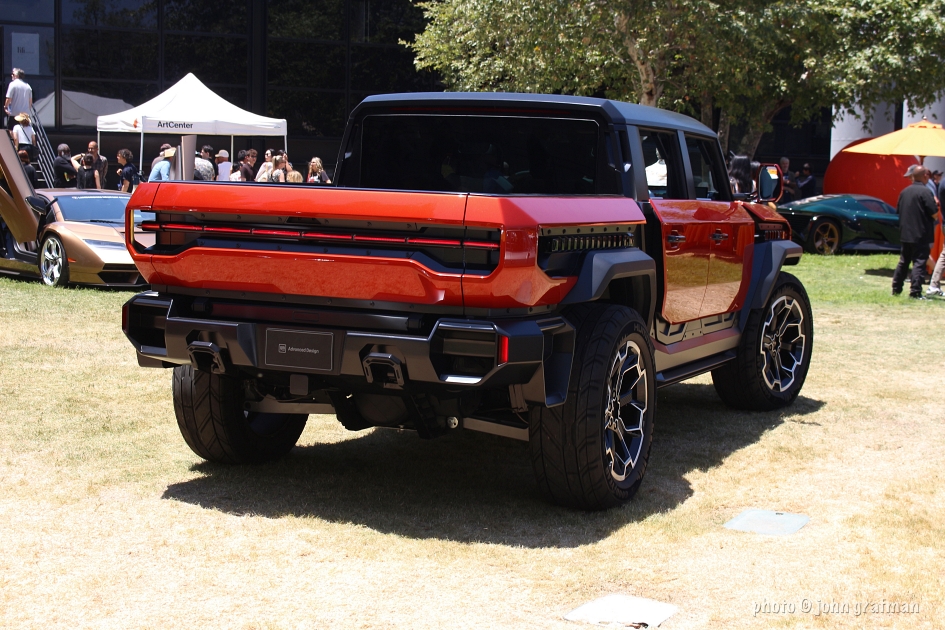
2026 GMC Hummer X concepts SUV
It’s really important as you’re designing the car, you’re living with it, you’re seeing it and you walk in in the morning and you see it and you start to develop almost a relationship with the design. And I completely agree with you. All of them are tools, right. Yeah. And that’s what we teach here is to use all of the tools at your disposal.”
Indeed, this was eye-opening for those students thinking of leaning into clay modeling as a profession. But, Brain took this a bit further once off stage. He reiterated his prior words, “We really believe in developing full scale clay models as part of our design process. We’re testing all the tools, all the new tools, and we’re using them all in the process. We have a very collaborative design process between digital and clay. And we really believe in hand sculpted surfaces.”
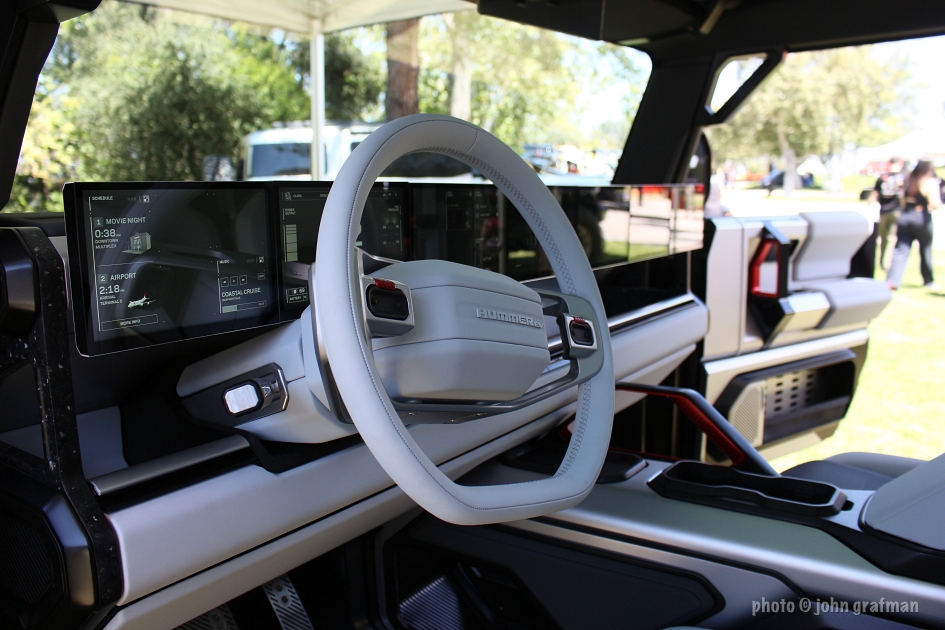
2026 GMC Hummer X concept SUV
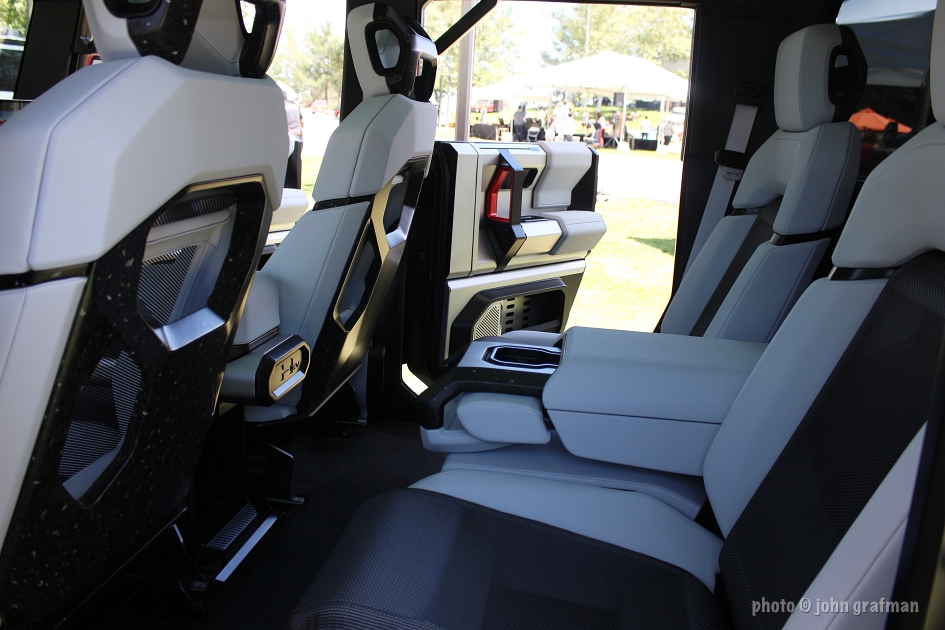
2026 GMC Hummer X concept SUV
Canary in a Coal Mine
Is there a canary in a coal mine at GM? Several of the clay modelers have recently been let go from the studio in Pasadena. As such, it was necessary to ask Brain as to why, especially when he feels very keenly about the role of clay modeling, just as he expressed to the hundreds on the ArtCenter Hillside Campus.
Brain was vague about this stating, “We still feel very strongly about modeling. I won’t comment too much on that. There was a restructuring as part of the business recently. I don’t have any comments about that.”
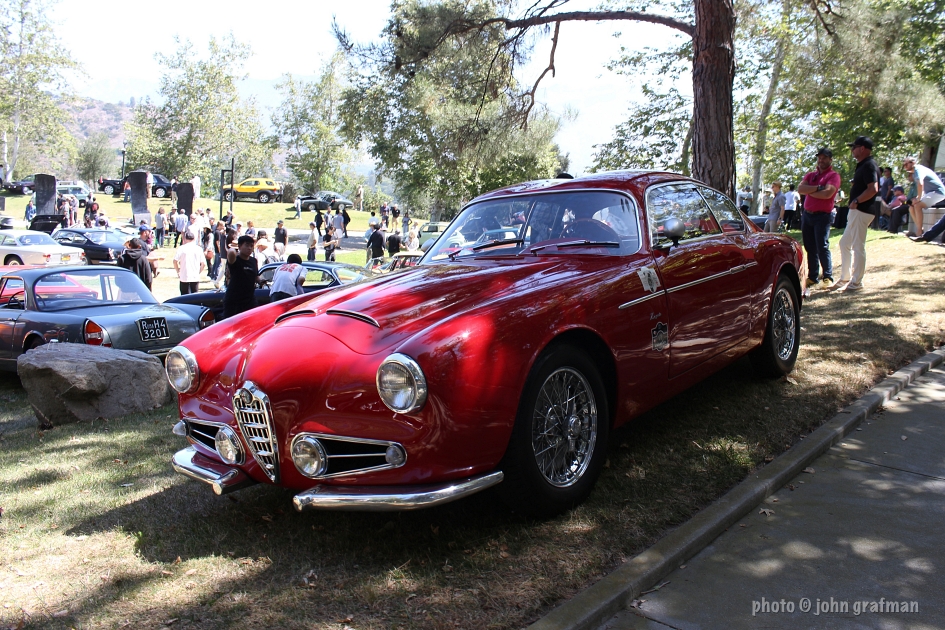
1956 Alfa Romeo 1900 SS2
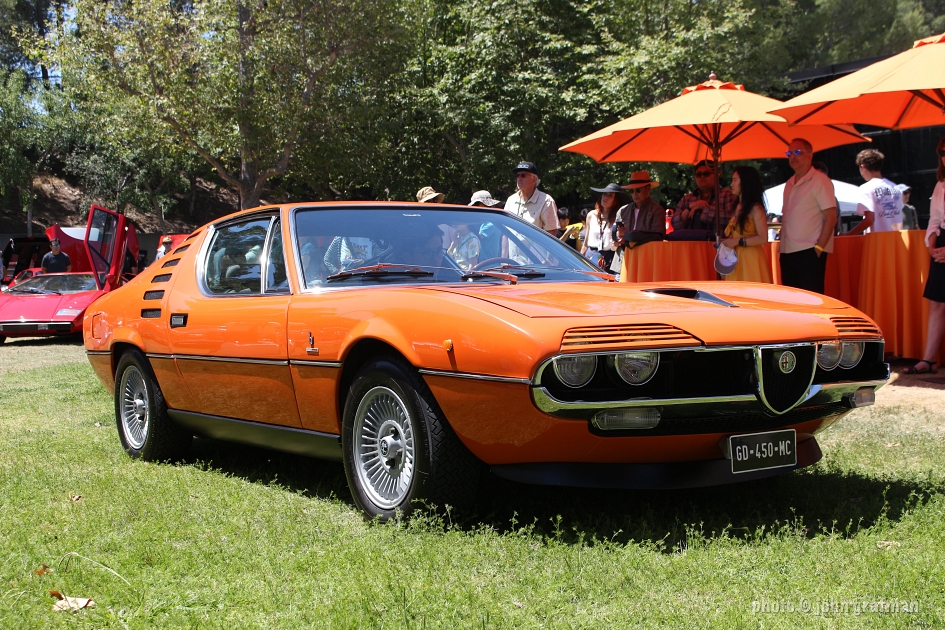
1974 Alfa Romeo Montreal
Undoubtedly, there are many design professionals that feel passionate about the value brought by the highly talented clay modelers and fabricators that bring a 3D model to life. Yet, there appears to be other dynamics at play. ArtCenter’s ability to navigate a student successfully through an educational program is not easy, but it gets even more challenging when there’s mixed messages involved. It’s very much a symbiotic relationship between design schools and industry. Both need each other to exist well into the future.
There have been a few notable people over the ages, from Mark Twain to Samuel Goldwyn, that touch on how difficult it is to know what’s coming down the road. But, perhaps the most fitting quote comes from Baseball great Yogi Berra, as he gets credit for immortalizing the phrase “It’s tough to make predictions,… especially about the future.” Undoubtedly, this applies to far more than baseball. Of course, every car designer wants to hit one out of the ballpark each and every time they’re up at bat.
Vehicles List The final lineup registered to display on Sunday
Featured Vehicles Year/ Make/ Model | Description
1961 Abarth Zagato Abarth 805SS
1956 Alfa Romeo 1900 SS2
1959 Alfa Romeo Giulietta Sprint
1960 Alfa Romeo 2000 Touring Spider
1967 Alfa Romeo Giulia
1974 Alfa Romeo Montreal
2008 Alfa Romeo Disco Volante Coupe By Touring Superleggera | Winner of the ArtCenter College of Design Award at The Quail, A Motorsport Gathering 2025
2023 Bentley Bentayga S
1994 Bimota DB2 | Italian motorcycle
1969 Detomaso Mangusta
1972 Detomaso Pantera coupe
2001 Ducati MH900e | Mike Hailwood Evoluzione
1961 Ferrari 250 GTE 2+2
1967 Ferrari 275 GTB/4 Scaglietti Berlinetta | Winner of the ArtCenter College of Design Award at Pebble Beach Concours d’Elegance 2025
1967 Ferrari 330 GTS Roadster
1983 Ferrari 512 BBi Boxer
1983 Ferrari 308 GTB Quattrovalvole
2025 Ferrari Daytona SP3 | With tailor-made exposed carbon fiber.
1968 Fiat 124 Spider AS
1969 Fiat Michelotti Shellette – One of fewer than 10 surviving examples
1970 Fiat 695 Abarth
1974 Fiat X-1/9
1969 Lamborghini Miura P400S
1969 Lamborghini Espada
1976 Lamborghini Countach LP400 Countach | “Periscopio” by Bertone
1983 Lamborghini Jalpa
2022 Lamborghini LP800-4
1956 Lancia Aurelia B20 GT – One of the cars that defined the modern grand tourer
1966 Lancia Flaminia GT 3C
1967 Lancia Flaminia Super Sport Zagato
1967 Lancia Fulvia HF
1974 Lancia Stratos
1977 Laverda 1200 Jota America | Italian motorcycle
1977 Lotus Esprit
1961 Maserati 3500 GT
1968 Maserati Sebring II
1971 Maserati Ghibli SS
1975 Maserati Khamsin
1989 Nissan Pao 1991 Nissan Figaro
1960 Porsche 356 Zagato Speedster – A rare fusion of German engineering and Italian Design
1971 Saab Sonett III
1962 Triumph TR3 Italia 2000
1962 Volkswagen TYPE 34 Karmann-Ghia
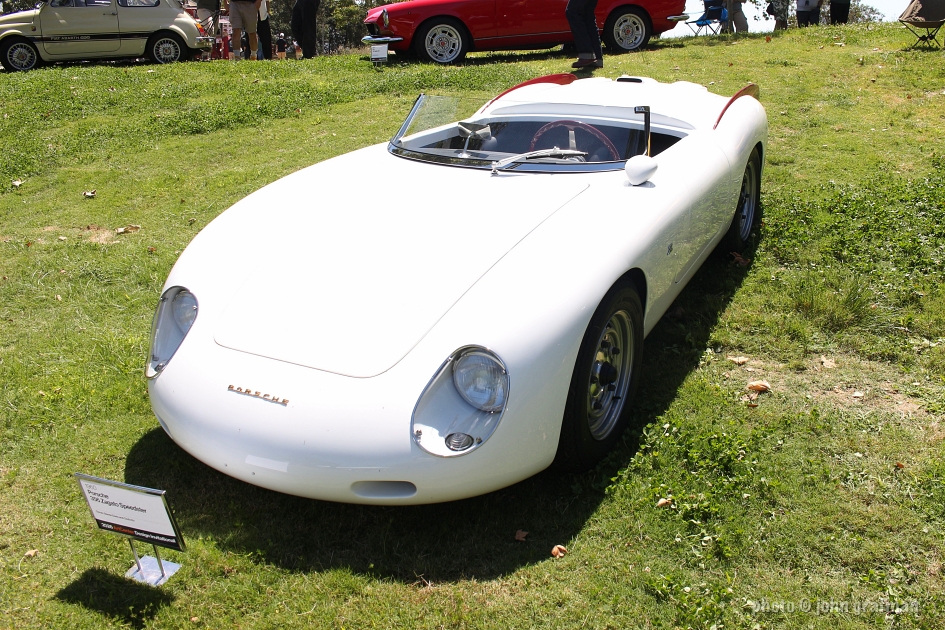
1960 Porsche 356 Zagato Speedster, ArtCenter College of Design, Design Invitational 2026
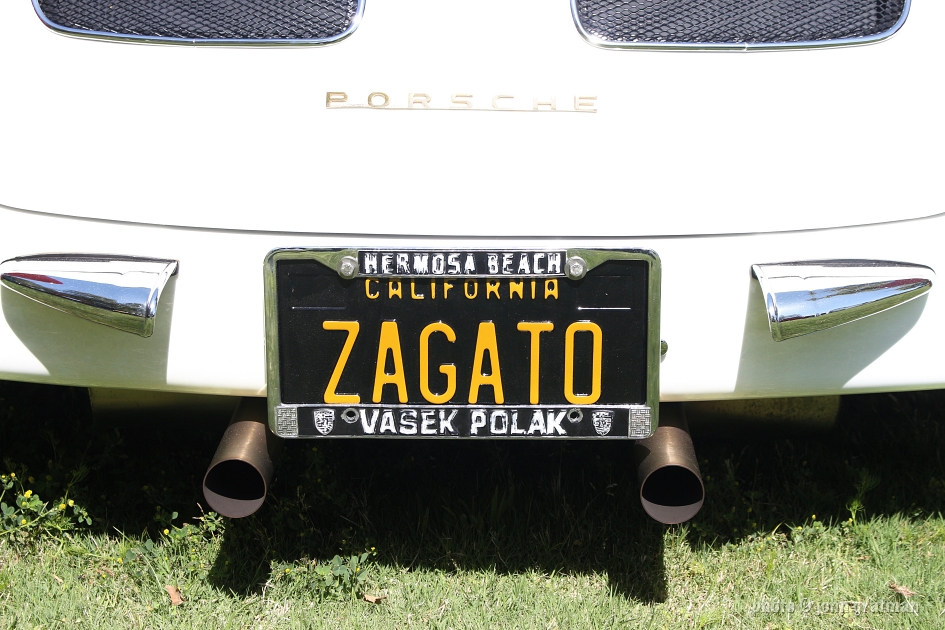
1960 Porsche 356 Zagato Speedster
Reuse of AutoDesignO published images and articles by permission only
Related Images: