Why does shiny matter? The question, as it pertains to our cars and trucks, seems like a simple one. After all, we wouldn’t want to walk out of the house in grimy clothes, and most enthusiasts feel the same about a dirty car. There are products, like those produced by Mothers Polish, for the passionate owners that love the interaction and the opportunity to bond with their beloved transport, even when not behind the wheel. Having a beautiful body isn’t enough. Sure, the handwashing process allows one to caress and physically appreciate the form of any automobile. Nevertheless, on a daily basis, most of our interactions are visual.
Article © John Grafman
Images provided courtesy of the respective OEMs and individuals
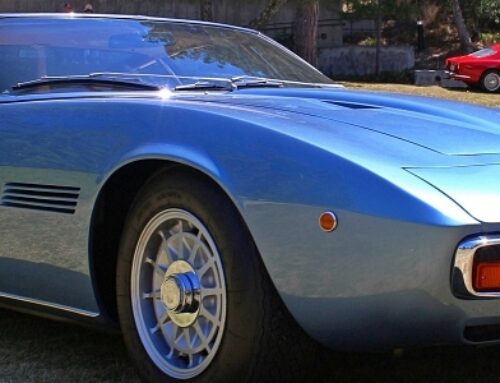
But there’s more to it, especially when digging deeper into human subconsciousness. And, then there’s the design side of the story. A brightly polished and waxed car allows one to fully appreciate a dynamic design, as the reflections and highlights radiate off the surfaces and edges, allowing one to absorb the full impact of the form. Without a clean and shiny surface, the impression becomes diffused and muted.

“What a lot of people don’t realize is that when you design a vehicle, so much of the effort that goes into what’s called highlight control,” according to Derek Jenkins, VP of Design at Lucid Motors. Jenkins dives deeper, “Highlight control is how a strip of light, like if you were to walk up to the car with a strip of light, what that reflection of that strip looks like on the car. How does the reflection move across the body, across the doors and into the contours of the fenders. That’s a kind of highlighting process and we use special tools both in the computer, as well as in the clay modeling process to control those reflections.
“And that is also like [when] the untrained eye sees those reflections, and they don’t know why the car looks good. They’re reacting to that – to that highlight control, if you will, that highlight design. That’s a major part of the sculpting and fine tuning and the nuances of automotive design.”
Being Able To Notice The Delicate Shapes
“Being able to notice the delicate shapes comes down to a number of factors.” Jenkins continues, “Inevitably, it comes down to like the shape of the surface of the car and the finish, the level of finish on the car, and the color of the car, and the effect that comes from the color’s makeup, the paint’s makeup – a solid color versus a form of metallic. And then, within metallics there’s a whole spectrum of what we call ‘flop conditions’, where the metallic causes a stronger color contrast in a highlighted area, area with direct sunlight versus a shaded area.

“The flop is the degree in which it goes from brightness to darkness. And that also has an effect on how the human eye perceives the shape of the car.”
Acting in harmony, the design coupled with a perfect surface can produce extraordinary results. Without both elements, the overall effect is downgraded.

Have The Most Beautiful, Mirror-Like Finish
“Perceived Quality – Shine is associated with cleanliness and luxury. A glossy car looks ‘newer’ and more high-end, even if the design itself is simple. It’s fun to wash, and when it’s spotless the surface feels smooth, sleek, and satisfying,” explains Dave Marek, Executive Creative Director – Acura. “That’s the wish: to have the most beautiful, mirror-like finish. We spend a lot of time working the reflections on a clay model. To buyers – they don’t know the work invested, but they know it looks great!”
Marek continues, “You see the reflections on a glossy car and the environment makes the paint look multicolored. Imagine a Black Car with a Yellow car parked next to it…The whole side reflects the yellow. Shiny paint has always been appealing—it feels more expensive, more beautiful.

“Psychological Impact – Humans are naturally drawn to shiny objects…Some studies suggest it connects to how water reflects light. Gloss grabs attention—the reflections create contrast between light and shadow, emphasizing design lines and adding drama.”
Different Strokes For Different Folks
Paint finishes are varied and attract diverse tastes. As the saying goes, different strokes for different folks. The current trend towards flat or satin finishes stem from a stealthy appearance to avoid detection by law enforcement. Matte finishes have outlaw appeal. Nowadays, it’s getting almost commonplace, sort of like disco music in the late 70s. Sure, it was cool to be an early adopter of the emerging dance music, but when even your mom is taking lessons to do The Hustle, it starts to lose its appeal rather quickly.

Without a doubt, today’s high-gloss paint technology can be blindingly attractive, and the contrast couldn’t be more obvious as observed by the general public, as well as design professionals.
Mark Stehrenberger, the esteemed Automotive/Product Designer/illustrious Illustrator, tells us, “Form development, reflections and highlights are important parts for a car design to pop. The latest innovations in paints make it even more exciting and can bring a car to life even while standing. Obviously, it takes plenty of refinement and knowledge on the part of the designer, i.e. details can enhance/destroy an otherwise good design.

Matte-Finished Vehicles Appear Only Two-Dimensional
“Matte-finished vehicles appear only two-dimensional and dead to me; they look cheap and don’t stand out, no matter what brand.”
So then, the obvious question is, how does one extract the best from what the OEMs provide in terms of shine? There are a several approaches. Those in the detail business praise the virtues of a clay bar and a quality polishing product. In a hands-on opportunity using Mothers Polish products, including California Gold Clay Bar, and the Mothers Polish California Gold Ceramic Paint Correction Polish, the results were obvious. This eliminated all the little imperfections that adhere to the paint surface, be it overspray, insect carcasses, tree sap, or whatever that has become one with the paint surface. Followed with the Ceramic Paint Correction Polish, it removed the micro blemishes and minor, fine scratches. Once completed, it leaves a bare, back-to-original (or close to that) finish. That alone would be enough to impress even a Pebble Beach Concours judge, if any happen to be strolling by.

The Paint Correction Polish, due to the abrasives, can be a bit of a challenge to apply as directed. One solution not found on the packaging instructions is to use a moist application pad, like the ones Mothers offers. Saturating the pad first in water and then wringing it out allowed the polishing product to glide smoothly onto the surface of the car with less force. Otherwise, it embeds into the pad and subsequently the applicator sticks to the car surface. Once dry, buffing it off was easier than anticipated.
A Tough, Long-Lasting Protective Coating
At that point, protocol dictates a wax job to both protect the now raw surface and to enhance the shine. The California Gold Ceramic Spray Wax is the formulated companion to the Paint Correction Polish. This wax does provide a tough, long-lasting protective coating. While this does the job properly, it doesn’t necessarily result in a deeper, wet-looking finish that can be found when using other Mothers Polish waxes. So, it’s a trade-off that still yields undeniable benefits.

According to Mothers, the California Gold Ceramic line is ceramic made simple. These products are user-friendly and provide great results on vehicles that have been traditionally waxed, or even if there has been a ceramic coating previously installed. These Mothers California Gold Ceramic products provide more resilient and longer lasting protection and also make routine washing quicker and easier, because soil doesn’t stick to ceramic like it can to an unprotected or waxed finish.
As luck would have it, a shower passed overhead after a recent application of the Ceramic Wash & Wax along with the California Gold Ceramic Spray Wax. The results were verifiable proof of the hydrophobic, repelling action. The raindrops that remained on the surface of the car were noticeably small and very uniform, as if this was done by a computer rather than nature. This was an impressive display of how effective these products work.

Derek Jenkins has the last word on this subject, “If the car has any dirt, any oxidation, anything that subdues that reflection, it’s just not as brilliant. It’s like a dull diamond versus one that’s been cut perfectly and highly reflective. They might have exactly the same basic shape, but they just look different!”
The way we see it is, a little elbow grease goes a long way to not just enhancing the shine but it enables the brilliance of the exterior design to shine on through.

The Mazda KAI Concept
Reuse of published images and articles by permission only
Related Images: